
Comparison of Metering Performance Between the Metal Chain Plate Belt Scale Feeder and the Rubber Belt Type Belt Scale

After calibration, testing, and on-site operation observation of multiple projects—including metal chain plate belt scale feeders, rubber belt feeders, and belt scales installed on rubber belt conveyors (with 1–8 metering idlers)—we confirm that metal chain plate belt scale feeders offer superior long-term stability in continuous metering compared to conventional rubber belt scales.
This design eliminates the two most troublesome error sources of belt scales:
- Elasticity changes of rubber belts due to temperature
- Belt deflection caused by uneven material distribution
How Belt Scales Work & Why Accuracy Is Unstable
Belt scales calculate total material flow by integrating load per meter (from weighing idlers) and belt speed (from speed sensors).
Key factors affecting accuracy:
- Dynamic accuracy of load cells
- Angle difference (consistency) between sensors
- Accuracy and pulses of speed sensors
- Sampling, filtering, and integration of the instrument
- Temperature-dependent elastic modulus of rubber/PVC belts
- Belt tension variation and deflection between idlers due to uneven material
The first four factors are well-resolved in the industry. The last two are the root causes of unstable accuracy under large temperature differences and uneven feeding.
Two Inherent Defects of Rubber Belts
Defect 1: Elastic modulus changes with temperature
Rubber becomes hard in winter and soft in summer. The empty belt “dead load” measured by sensors varies significantly between morning and afternoon—not from scale malfunction, but from changes in belt mechanical properties.
Temperature compensation can only approximate correction, not eliminate errors.
Defect 2: Belt deflection varies with uneven material
Rubber belts are not rigid. Heavier material sections sag more; lighter sections rise. This creates a variable dead load, leading to false signals that the scale cannot distinguish.
These defects are inherent to rubber belts and cannot be eliminated, only mitigated.
How Metal Chain Plate Structure Solves These Problems
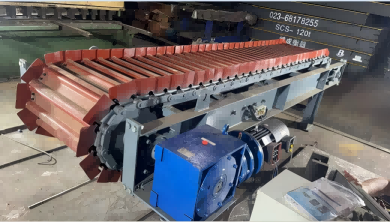 A metal chain plate belt weigher feeder B600-L2.9m
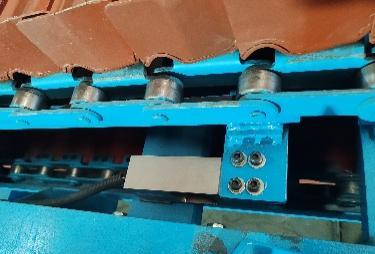 A metal chain plate belt weigher feeder B600-L2.9m
Metal chain plate belt scale feeder features:
- Metal chain plates instead of rubber belts
- Steel support rollers under chain plates
- Support rails mounted directly on weighing sensors (2–8 pcs)
- Near-zero deflection in the weighing zone
- Belt speed: 0.2–0.8 m/s.
Temperature influence: Metal has a negligible temperature-dependent elastic modulus; dead load remains stable for months.
Deflection influence: Rigid support eliminates sag. Chain plate dead load is constant; measured changes reflect only material weight.
This design fundamentally removes the two major error sources.
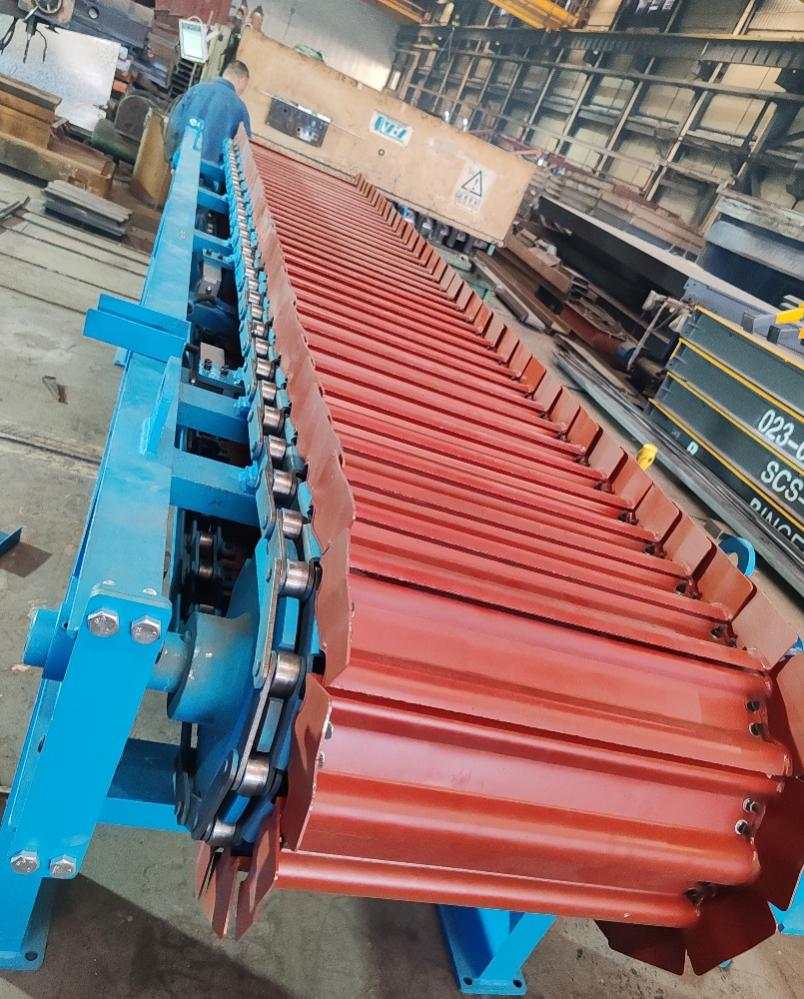
4. Actual Accuracy
- Metal chain plate feeder: ±0.1% ~ ±0.5%; high-end version: ±0.1% ~ ±0.2%
- Meets trade settlement requirements (typically ≤±0.3%)
- Rubber belt scales struggle to stably reach ±0.2%
5. Suitable Applications
- Large temperature difference environments
- Uncontinuous / uneven material feeding
- Bulk, powder, granular, or block mixed materials
- High-temperature materials (damaging to rubber belts)
Limitations: heavier structure, higher power, and cost. Worthwhile for high-value materials, trade settlement and precise process proportioning.
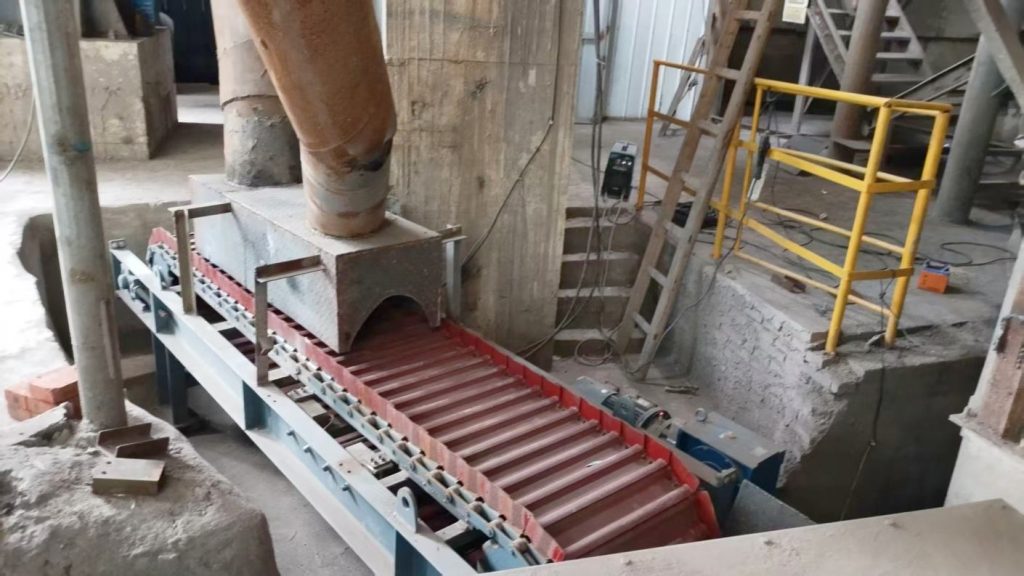 Chain-plate belt weigher feeder – On-site installation example 1 (with dust extraction pipeline)
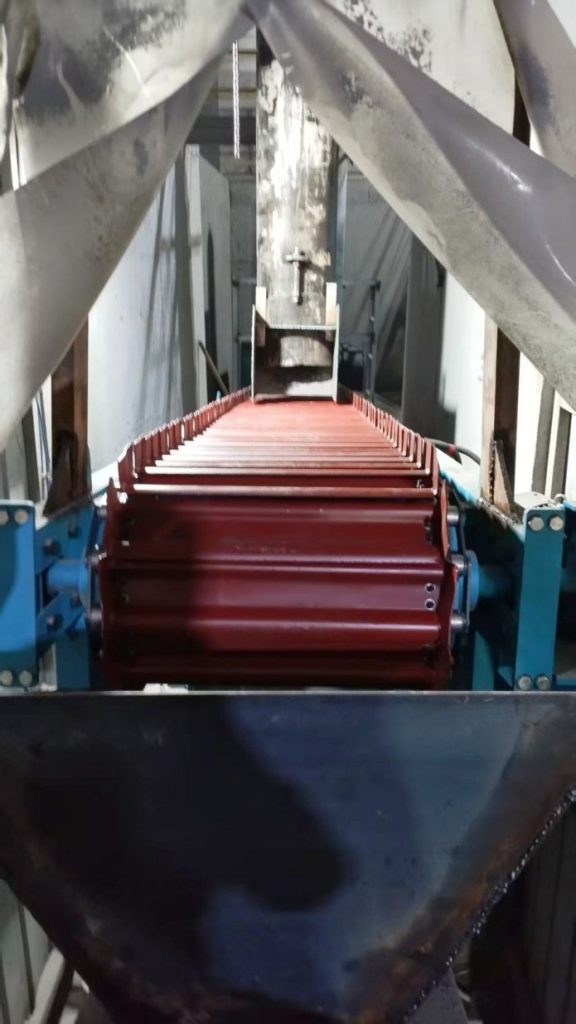 Chain-plate belt weigher feeder – Field installation example 2
Conclusion
The accuracy bottleneck of rubber belt scales lies in the belt itself, not sensors or instruments.
Metal chain plate structure bypasses temperature and deflection issues by rigid design, delivering reliable long-term accuracy.It is the better choice for continuous bulk material metering requiring stable, trustworthy precision.
