
The 2025 Weighbridge Buying Guide Everyone’s Sharing: Best Picks for Mining, Recycling, Logistics & Food Sites
Different industries utilise weighbridges for a wide variety of purposes. Mud and 90-ton trucks versus clean floors and strict hygiene regulations. This is why buying “just any weighbridge” usually ends up causing repairs, downtime, and/or accuracy issues.
- Dirty site → Pitless
- Fast traffic → Pit type
- Need clean records → Digital or Smart
Every week, we witness the everyday challenges faced by weighbridge manufacturers like you.
With that in mind, we provide you with a real-world, elementary, and highly practical guide without the use of complex terminology.
What Weighbridge Is the Best Pick for Mining, Recycling, Logistics & Food Sites
This table gives you a quick snapshot of the top risk for each industry and the type of weighbridge that handles it best.
| Industry | Daily Conditions | Biggest Risk | Best Weighbridge Type | Why It Works |
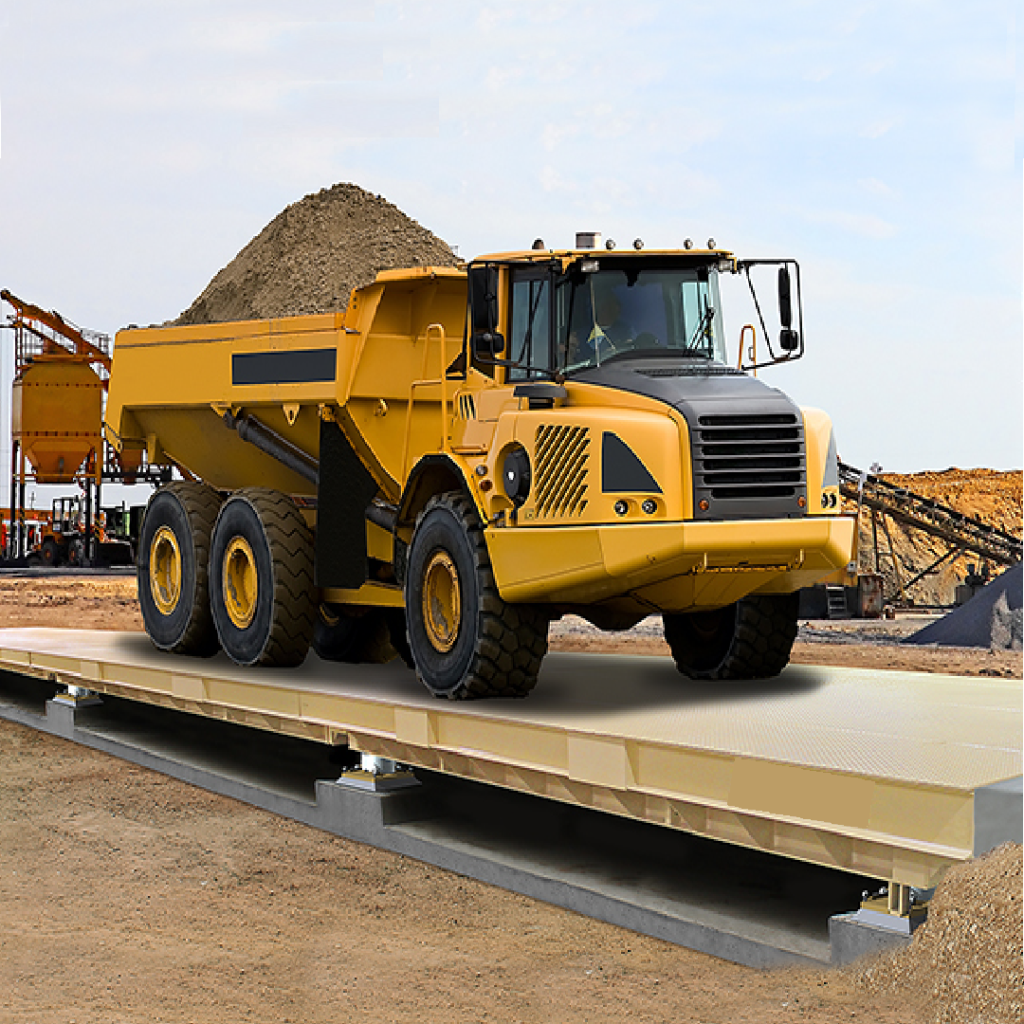
| Mining | Mud, heavy trucks, harsh weather | Damage from impact + hard cleaning | Pitless, fixed, heavy-duty deck | Open space under deck makes cleaning and repairs easier |
| Recycling | Waste, dirt, debris buildup | Sensors getting blocked | Pitless, open-structure deck | Debris falls through instead of blocking sensors |
| Logistics | High traffic, time pressure | Slow truck flow | Pit type + digital + smart automation | Drive-through weighing speeds up operations |
| Food Processing | Hygiene control, water washdown | Contamination + rust | Pit type + closed deck + stainless options | Flush-to-ground design is easier to keep clean |
Dirty site = Pitless.
High-traffic site = Pit type.
Clean or hygiene-sensitive site = Closed deck.
1. Pitless vs Pit Type Weighbridges: The Most Important Decision
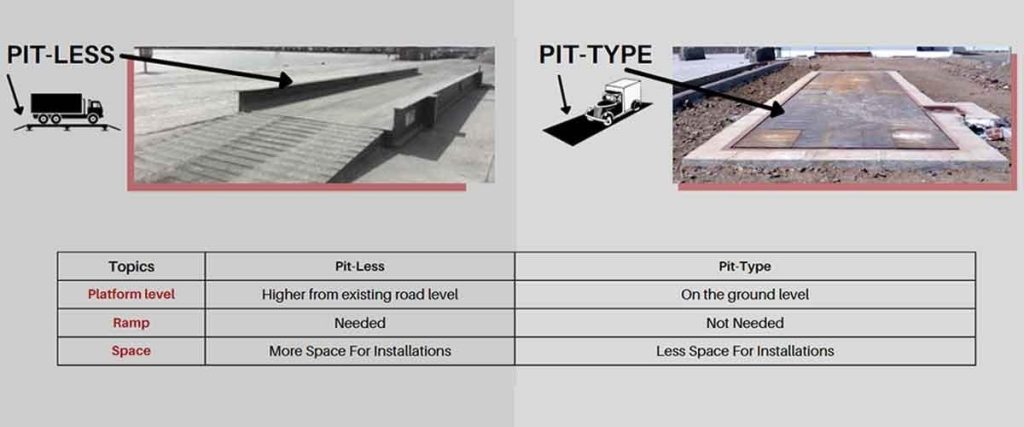
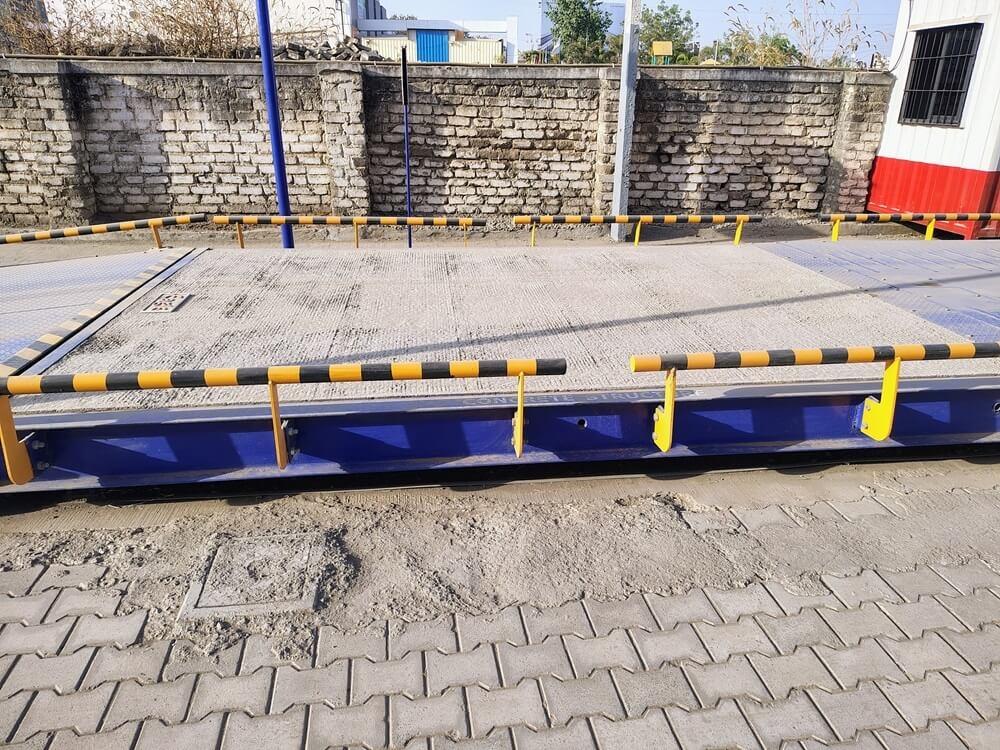
Pitless Weighbridges (Above-Ground)
Tonnage: 30–120 tons
Where it shines: mining, recycling, construction yards
Pros
- Lower installation cost
- Much easier to maintain
- Works even on uneven or rough ground
- No drainage problems
Cons
- Needs ramp space
- Slower traffic flow
Best when: your environment is messy, rough, or constantly changing.

Pit Weighbridges (In-Ground)
Tonnage: 50–150 tons
Where it shines: logistics, food factories, distribution centers

Pros
- Fast drive-through weighing
- Small footprint
- Cleaner, more professional on-site look
- No ramps needed
Cons
- Higher civil cost
- Requires reliable drainage
- Harder to access for repairs
Best when: site speed and neat layout really matter.
2. Portable Weighbridge vs Axle Scale — Not the Same Thing
Portable Weighbridge (Modular Full-Length)
Tonnage: 30–80 tons
Pros
- Full truck weight in one shot
- Quick setup
- Ideal for temporary or seasonal work
Cons
- Not as solid as a fixed build
- Needs a flat platform
Best for: construction projects, rentals, temporary sites.

Axle Scale (Axle Pads)
Tonnage: 5–20 tons per axle

Pros
- Super lightweight
- Fits in a car trunk
- Quick roadside use
Cons
- Slower for multi-axle trucks
- Not always trade-legal
Best for: roadside checks and quick screenings—not for official billing.
3. Digital vs Standard Weighbridge— Think About Data, Not Just Weight
Digital Weighbridges
Tonnage: 40–150 tons
Pros
- More stable readings
- Cleaner data
- Works with ERP / software
- Great for audits and traceability
Cons
- Slightly higher cost
- Needs stable power and a network
Best for: any operation with invoices, records, or compliance.

Standard Weighbridges
Tonnage: 30–120 tons

Pros
- Simple
- Affordable
- Easy to run
Cons
- Manual entries → human errors
- Not great when scaling up operations
Best for: small yards or low-traffic sites.
4.Smart / Unmanned vs Traditional — Automation Makes a Difference
Smart / Unmanned Weighbridge
Features include ANPR cameras, auto ticketing, barriers, and sensors.
Pros
- No operator needed
- Zero manual mistakes
- 24/7 work
- Everything is recorded
Cons
- Higher initial investment
Best for: logistics hubs, mines, and large industrial gates.

Traditional (Manual)

Pros
- Low cost
- Easy to understand
Cons
- Depends on the operator
- Risk of inconsistent data
Best for: simple operations where speed isn’t critical.
6. Mobile vs Fixed Weighbridge — Do You Need to Move It or Not?
Mobile Weighbridge
Tonnage: 20–60 tons
Pros
- Relocatable
- Minimal civil work
- Easy for temporary projects
Cons
- Less durable long-term
- Not ideal for heavy continuous flow
Best for: construction, mining exploration, and remote temporary sites.

Fixed Weighbridge
Tonnage: 50–150 tons

Pros
- Strongest and longest-lasting
- Handles high throughput
- Best long-term ROI
Cons
- Not portable
- Higher installation cost
Best for: main factory gates and long-term permanent setups.
Final
| Industry | Best Setup | Reason |
| Mining | Pitless + Fixed heavy deck | Handles dirt + impact |
| Recycling | Pitless + Open deck | Avoids debris buildup |
| Logistics | Pit type + Digital + Smart | Speed + accuracy + automation |
| Food | Pit type + Closed/stainless | Hygiene + easy washdown |
Why Bincen Is Worth Considering
If you’re shortlisting weighbridge manufacturers, Bincen is a solid starting point.
They’re known for:
- Practical, long-lasting steel decks
- Both pit and pitless options
- Portable + mobile solutions
- Digital and smart weighbridge systems
- Clear installation drawings and support
